

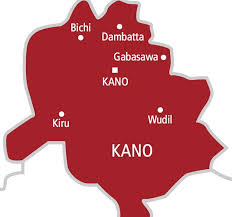
For decades, residents of Dutsen Bakoshi village in Shanono Local Government Area of Kano State have been battling a long-standing water crisis that has left them struggling to access clean water for daily household use, a situation that has continued to threaten the community’s economic development.
In a twisted fate, not only is the lack of potable water threatening the development of the community, it has ironically taken a negative toll on the education of the girl-child as many young girls have been forced to drop out of school due to their continuous daily search for water for their various families.
Findings by Weekend Trust showed that with a population of over 40,000 people spread across the 21 villages in the community, more than half of the residents, mostly farmers and their livestock, depend solely on seasonal dams that bear water only during the rainy season for their daily water needs.
Findings also showed that residents, especially girls of school age, battle several hurdles to get water during the dry season as access to clean, potable water remains a daily challenge in the community.
Dutsen Bakoshi community is named after its legendary founder who reportedly discovered a large rock in the area, which is a major characteristic of the community that cannot be missed by any visitor in the area. However, ironically, this edifice, which is supposed to be a plus in terms of tourism for the community, is said to be one, if not the major factor responsible for the water shortage and sometimes lack of water in the area.
Despite its size and the number of surrounding villages, clean water remains a scarce necessity to come by in the community.
Weekend Trust’s visit to the community showed a community where girls of school age fetch water from available earth dams during school hours, a sight that has become a norm in the community.
Malam Musa Isyaku, a resident in the community, explained what waking up daily in the community means, especially for the girl-child. He noted that it means a continuation of daily struggle in search of water. He explained that due to lack of water in the community, many children, especially their daughters, could not fully attend school because everyday, they have to trek long distances in search of water for domestic use, especially during the dry season when the dams become dry.
“Every morning, our children have to leave in search of water; and you know that water is life. Every child has to ensure that his or her home has water for daily use before thinking of doing any other thing. This is our daily routine, especially during the dry season. Our children cannot afford to attend school fully because no matter what, they have to miss classes every day of the week. We are pleading with the government and anyone who can assist us to help bring an end to our suffering,” he said.
Another resident, Malama Maryam Tijjani, said earth dam had been their only source of water in the area, and after it dries off during the dry season, the hurdle of getting water begins until another rainy season. According to her, although the earth dam water is not clean, it has been the easiest way for them to get water for the community’s daily use.
“We are not oblivious of the fact that the available water is not clean for consumption but we do not have a choice. Our greatest trying moments every year is during the dry season because water during that period is equal to gold.
“Despite the fact that we have to use other means of water purification for the available water during the rainy season, as you can see, the water is still not clean. We use alum to treat it before we can use it,” Maryam said.
It was gathered that during dry season, members of the community cover many kilometers before they can get water, and those who cannot go to that extent rely on water vendors. A 25-litre container of water is sold at N500 for those that can afford it.
“A jerry can of 25 litres of water costs N500 during the dry season. This has put many families in this area under a lot of pressure. If you require 100 litres of water daily in your home, it means you need N2,000 daily for water, meaning that in a month, you will spend N60,000. This is what we have been going through, and that has made us to allow our children to fetch water for us despite the distance and the fact that they will miss school every day. We want our children in school but there’s hardly time. We are struggling to find both food and water,” Habiba Tijjani narrated.
‘Sad to see our daughters stop school for water’
Malama Asma’u Umar, a mother of four, said although as mothers they hate it when their children miss their classes or stop going to school, they had no option, especially during the dry season as the search for water is top priority for most families in the community, and as such, issues of schooling has no place.
“Our children, especially daughters, walk long hours to get us the water we will use. Not every family can afford to buy water from water vendors. The government should assist us to get water so that our children can go to school,” she pleaded.
One of the community leaders in the area, who is also a father, Malam Saidu Turaki, said it’s unfortunate that members of other communities blame them for their inability to send their children to school, not knowing that the issue is deeply rooted in the community’s lack of water.
He explained that as parents, their wish is to see that, like other children in cities, theirs would also prosper in life by getting good educated. He called on the authorities concerned to, as a matter of urgency, come to the aid of their community by providing water.
“People often blame parents for their children not going to school, but it is mostly due to the water crisis, especially given our large population. We want our children to go places and make us proud as parents too, but we are faced with an issue that requires urgent attention from the government. We have done our best at the community level, but as you can see that our best is not enough,” he said.
Malam Shuaibu Mustapha, a father of seven, noted that the community was well informed on the importance of education but said there’s equally a need for them to survive as a family. According to him, water scarcity in the community has become an issue they have to contend with, especially during dry season. He called on the state government to assist the local government in establishing an alternative source of water for the community.
‘Search for water hinders our education’
A 15-year-old Sadiqa Tijjani who lives with her parents in the community stopped going to school from JSS2 due to the responsibility to go in search of water for her family. She told Weekend Trust that she wanted to go to school and study but the search for water on a daily basis, especially during the dry season, posed a threat.
“Getting water is extremely difficult. It takes so much of our time. We can’t even go to school because during the dry season, there’s no water at all and we have to look for it to survive. Many girls like me are currently not in school because we have to look for water for our parents,” she said.
Sayyada Abdu, another 16-year-old girl who also stopped going to school at primary five, said she really missed studies, adding that the long search for potable water forced her to abandon her dream of getting good education.
She noted that many girls in her community had since abandoned school just to assist the family in search of water for their daily needs.
Reason for water shortage
The ward head of Dutsen Bakoshi, Ibrahim Ahmed, explained that the lack of potable water in the area had its root in the community’s geographical location. According to him, findings showed that the area lies beneath rocky plains that make it difficult for households to dig wells for water supply. He added that individuals in the community had tried to drill boreholes but the task was beyond their capacity.
He pleaded with well-meaning Nigerians and the state government to come to the aid of the community by providing potable water for the people.
Similarly, the councilor representing Dutsen Bakoshi, Abba Muhammad Idris, said that on many occasions, the local government had made several attempts to drill a borehole in the area but their efforts kept failing because of its topography.
“The government has made several attempts but our land is rocky. We have drilled as deep as 150 to 200 meters without finding water. This dam is our neFrom Abdulazeez Ibrahim, Kano
For decades, residents of Dutsen Bakoshi village in Shanono Local Government Area of Kano State have been battling a long-standing water crisis that has left them struggling to access clean water for daily household use, a situation that has continued to threaten the community’s economic development.
In a twisted fate, not only is the lack of potable water threatening the development of the community, it has ironically taken a negative toll on the education of the girl-child as many young girls have been forced to drop out of school due to their continuous daily search for water for their various families.
Findings by Weekend Trust showed that with a population of over 40,000 people spread across the 21 villages in the community, more than half of the residents, mostly farmers and their livestock, depend solely on seasonal dams that bear water only during the rainy season for their daily water needs.
Findings also showed that residents, especially girls of school age, battle several hurdles to get water during the dry season as access to clean, potable water remains a daily challenge in the community.
Dutsen Bakoshi community is named after its legendary founder who reportedly discovered a large rock in the area, which is a major characteristic of the community that cannot be missed by any visitor in the area. However, ironically, this edifice, which is supposed to be a plus in terms of tourism for the community, is said to be one, if not the major factor responsible for the water shortage and sometimes lack of water in the area.
Despite its size and the number of surrounding villages, clean water remains a scarce necessity to come by in the community.
Weekend Trust’s visit to the community showed a community where girls of school age fetch water from available earth dams during school hours, a sight that has become a norm in the community.
Malam Musa Isyaku, a resident in the community, explained what waking up daily in the community means, especially for the girl-child. He noted that it means a continuation of daily struggle in search of water. He explained that due to lack of water in the community, many children, especially their daughters, could not fully attend school because everyday, they have to trek long distances in search of water for domestic use, especially during the dry season when the dams become dry.
“Every morning, our children have to leave in search of water; and you know that water is life. Every child has to ensure that his or her home has water for daily use before thinking of doing any other thing. This is our daily routine, especially during the dry season. Our children cannot afford to attend school fully because no matter what, they have to miss classes every day of the week. We are pleading with the government and anyone who can assist us to help bring an end to our suffering,” he said.
Another resident, Malama Maryam Tijjani, said earth dam had been their only source of water in the area, and after it dries off during the dry season, the hurdle of getting water begins until another rainy season. According to her, although the earth dam water is not clean, it has been the easiest way for them to get water for the community’s daily use.
“We are not oblivious of the fact that the available water is not clean for consumption but we do not have a choice. Our greatest trying moments every year is during the dry season because water during that period is equal to gold.
“Despite the fact that we have to use other means of water purification for the available water during the rainy season, as you can see, the water is still not clean. We use alum to treat it before we can use it,” Maryam said.
It was gathered that during dry season, members of the community cover many kilometers before they can get water, and those who cannot go to that extent rely on water vendors. A 25-litre container of water is sold at N500 for those that can afford it.
“A jerry can of 25 litres of water costs N500 during the dry season. This has put many families in this area under a lot of pressure. If you require 100 litres of water daily in your home, it means you need N2,000 daily for water, meaning that in a month, you will spend N60,000. This is what we have been going through, and that has made us to allow our children to fetch water for us despite the distance and the fact that they will miss school every day. We want our children in school but there’s hardly time. We are struggling to find both food and water,” Habiba Tijjani narrated.
‘Sad to see our daughters stop school for water’
Malama Asma’u Umar, a mother of four, said although as mothers they hate it when their children miss their classes or stop going to school, they had no option, especially during the dry season as the search for water is top priority for most families in the community, and as such, issues of schooling has no place.
“Our children, especially daughters, walk long hours to get us the water we will use. Not every family can afford to buy water from water vendors. The government should assist us to get water so that our children can go to school,” she pleaded.
One of the community leaders in the area, who is also a father, Malam Saidu Turaki, said it’s unfortunate that members of other communities blame them for their inability to send their children to school, not knowing that the issue is deeply rooted in the community’s lack of water.
He explained that as parents, their wish is to see that, like other children in cities, theirs would also prosper in life by getting good educated. He called on the authorities concerned to, as a matter of urgency, come to the aid of their community by providing water.
“People often blame parents for their children not going to school, but it is mostly due to the water crisis, especially given our large population. We want our children to go places and make us proud as parents too, but we are faced with an issue that requires urgent attention from the government. We have done our best at the community level, but as you can see that our best is not enough,” he said.
Malam Shuaibu Mustapha, a father of seven, noted that the community was well informed on the importance of education but said there’s equally a need for them to survive as a family. According to him, water scarcity in the community has become an issue they have to contend with, especially during dry season. He called on the state government to assist the local government in establishing an alternative source of water for the community.
‘Search for water hinders our education’
A 15-year-old Sadiqa Tijjani who lives with her parents in the community stopped going to school from JSS2 due to the responsibility to go in search of water for her family. She told Weekend Trust that she wanted to go to school and study but the search for water on a daily basis, especially during the dry season, posed a threat.
“Getting water is extremely difficult. It takes so much of our time. We can’t even go to school because during the dry season, there’s no water at all and we have to look for it to survive. Many girls like me are currently not in school because we have to look for water for our parents,” she said.
Sayyada Abdu, another 16-year-old girl who also stopped going to school at primary five, said she really missed studies, adding that the long search for potable water forced her to abandon her dream of getting good education.
She noted that many girls in her community had since abandoned school just to assist the family in search of water for their daily needs.
Reason for water shortage
The ward head of Dutsen Bakoshi, Ibrahim Ahmed, explained that the lack of potable water in the area had its root in the community’s geographical location. According to him, findings showed that the area lies beneath rocky plains that make it difficult for households to dig wells for water supply. He added that individuals in the community had tried to drill boreholes but the task was beyond their capacity.
He pleaded with well-meaning Nigerians and the state government to come to the aid of the community by providing potable water for the people.
Similarly, the councilor representing Dutsen Bakoshi, Abba Muhammad Idris, said that on many occasions, the local government had made several attempts to drill a borehole in the area but their efforts kept failing because of its topography.
“The government has made several attempts but our land is rocky. We have drilled as deep as 150 to 200 meters without finding water. This dam is our nearest source. Once it dries up, we walk for hours to get water or buy from vendors. The case is before the council and I am sure that something will be done soon,” he said.
Govt’s effort
Also speaking on the issue, the council chairman, Abubakar Barau Shanon, said they were making efforts to ensure that the community has access to potable water. He said the council was trying to partner with the authorities in the state and other water-providing agencies to ensure that a lasting solution to the water problem is provided
“At the local government level, we plan to conduct another site survey this week. While we haven’t found a suitable location within the town, we identified a viable spot some distance away. Unfortunately, this means that people will have to go a little far distance to access it, so the water challenge within the town remains. Last year, during the dry season, those who attempted to use water for irrigation farming could not do so because the people and livestock needed the water,” he said.arest source. Once it dries up, we walk for hours to get water or buy from vendors. The case is before the council and I am sure that something will be done soon,” he said.