

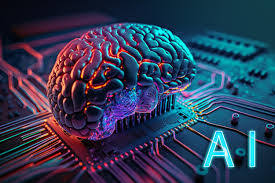
Artificial Intelligence (AI) has transformed how we work, learn, and live. From automatic translations to health diagnostics and decision-making algorithms, AI promises efficiency and accuracy beyond human capacity. However, beneath its remarkable advancements lies a critical question: Is AI diminishing our human thinking capacity?
Historically, humans have adapted to technological innovations. The printing press expanded literacy, calculators made mathematics faster, and the internet revolutionised information access. Yet, unlike previous tools, AI does not just assist thinking – it often thinks for us.
Consider everyday examples:
- Navigation Apps: Many young people today cannot read maps or navigate familiar routes without Google Maps or Waze.
2. Grammar and Writing Tools: Students now depend on AI-powered grammar checkers and paraphrasing tools, eroding confidence in their own writing abilities.
3. Search Engines: Rather than analyse, synthesise, and reflect, people often copy answers directly, bypassing critical thinking processes.
While these tools save time, their long-term public health and cognitive implications are profound. Research has shown that over-reliance on AI can reduce cognitive engagement, memory retention, and problem-solving skills. In simpler terms, the more we allow AI to think for us, the less we train our brains to think independently.
This concern extends beyond academic or professional performance. Decision-making, moral reasoning, and creativity are uniquely human faculties shaped by practice, mistakes, and reflection. As AI becomes embedded in our lives, we risk creating a society that can no longer think deeply, discern critically, or innovate meaningfully.
However, this is not to demonise AI. Like every technology, its impact depends on how we use it. Here are three pathways to protect our thinking capacity in the age of AI:
1. Use AI as an Assistant, Not a Brain Replacement. Let it edit your writing but draft your original ideas yourself. Let it analyse data, but interpret and critique the results independently.
2. Prioritise Cognitive Workouts. Engage in problem-solving activities, reading, public speaking, and deep reflective thinking daily. Like muscles, the brain weakens without deliberate use.
3. Teach Digital Discernment in Schools. Equip young people with the ability to ask critical questions about AI outputs, assess bias, and reflect deeply before accepting suggestions.
The future of humanity lies not just in technological advancement, but in the preservation and strengthening of the human mind. AI is a powerful servant, but it must never become the master of our thinking.
As Africans embracing technological revolutions, we must ensure that our minds remain sharper than our machines. Only then can AI serve as a tool for development rather than a replacement for our divine cognitive gifts.
Author Bio
Folashade A.M is a Public Health Professional, Project Management Practitioner, and Youth Wellness Advocate, passionate about integrating traditional wisdom with modern solutions for Africa’s holistic development.