
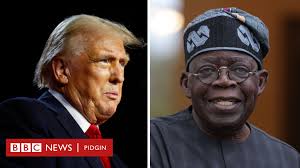
PRESIDENT Donald Trump’s partial withdrawal of donor support for global health services marks a critical moment worldwide. As the US is the largest donor to this cause, this funding shortfall has raised fears in many countries.
Nigeria, heavily reliant on donor funding for its healthcare system and epidemic control, will certainly be adversely affected.
This situation underscores the urgent need for Nigeria to look inward to address its healthcare challenges.
Reacting to the US decision, the WHO trimmed its annual budget for 2026/2027 from $5.3 billion to $4.2 billion. This was lower than the budget for 2024/2025 of $6.8 billion.
According to WHO’s Eastern Mediterranean Regional Director, Hanan Balkhy, 60 per cent of the base budget for 2027 has been secured through contributions from donor countries and international foundations. However, it has not been able to raise $1.7 billion despite trimming its budget.
Since 2020, Trump has accused the WHO of being “the puppet of China” after he alleged that the organisation let China get away with releasing the COVID-19 virus to the rest of the world without appropriate sanctions. In his second term, Trump has not relented.
This bias was further foregrounded by the current US Health Secretary, Robert Kennedy Jnr, who lamented the undue influence of China, gender ideology and global pharmaceutical companies. He described the WHO as bloated and moribund, urging countries to remove themselves from the WHO to build another global health platform.
Unfortunately, Nigeria has failed to learn veritable lessons from the COVID-19 pandemic. Western countries refused to give the country access to the vaccines for many months. Yet it has failed to create a robust foundation for drug and vaccine production at home.
The world does not owe Nigeria any sanctuary, therefore, it needs to buckle down.
No doubt, Nigeria will feel the strain of the donor shortfall. Nigeria reportedly received $1.26 billion in donations from the WHO between 2016 and 2024. Out of the whole sum, the US contributed the highest.
Outside the WHO, the US has also shirked its financial interventions to Nigeria through government agencies like the USAID, the US Centres for Disease Control and Prevention, and the US Trade and Development Agency.
These agencies provide funding for various healthcare programmes, including HIV/AIDS, disease outbreaks, and cancer treatment. They also provide infrastructure support and improve health systems.
Unfortunately, Nigeria has failed to optimally utilise past donations due to corruption. In 2016, the Global Fund to Fight Aids’ inspector-general revealed that $3.8 million allocated to Nigeria’s AIDS agency was stolen by its workers and consultants between 2010 and 2014.
The Global Fund subsequently suspended payments to the agency due to the fraud and other conditions.
Insecticide-treated nets made available by donors to tackle malaria are sold in shops and pharmacies; meningitis vaccines are stored away from the reach of poor citizens.
So, Nigeria must make a measurable impact in maternal health, childcare, environmental health and tackle recurrent diseases like diphtheria, typhoid, and malaria.
Healthcare should be prioritised and accessible to all citizens irrespective of their economic status. Mechanisms must be emplaced to reprimand corrupt officials who sabotage progress in the healthcare sector.
Nigeria should borrow a leaf from the book of Cuba. Despite being isolated from the Western world, it established an acclaimed primary healthcare system, thereby boosting the overall well-being of its citizens.
Nigeria must develop homegrown capacity for research and development, while revamping the healthcare system.
The research institutions should collaborate with manufacturing industries to create a seamless mechanism to produce drugs and vaccines. The government should achieve this through a public-private partnership and grants.
Nigeria must prioritise healthcare. It should train and incentivise its health professionals, curb the blatant medical tourism and shameful medical visits by political leaders, and revamp its health infrastructure.